Understand your brain today. Nurture the one you want tomorrow.
NeuroBloom analyzes your brain's electrical activity, explains what it finds in plain language, and builds an individualized at-home tDCS program. The app walks you through every session and tracks progress.
Your brain has patterns. NeuroBloom reads them and tells you what they mean.
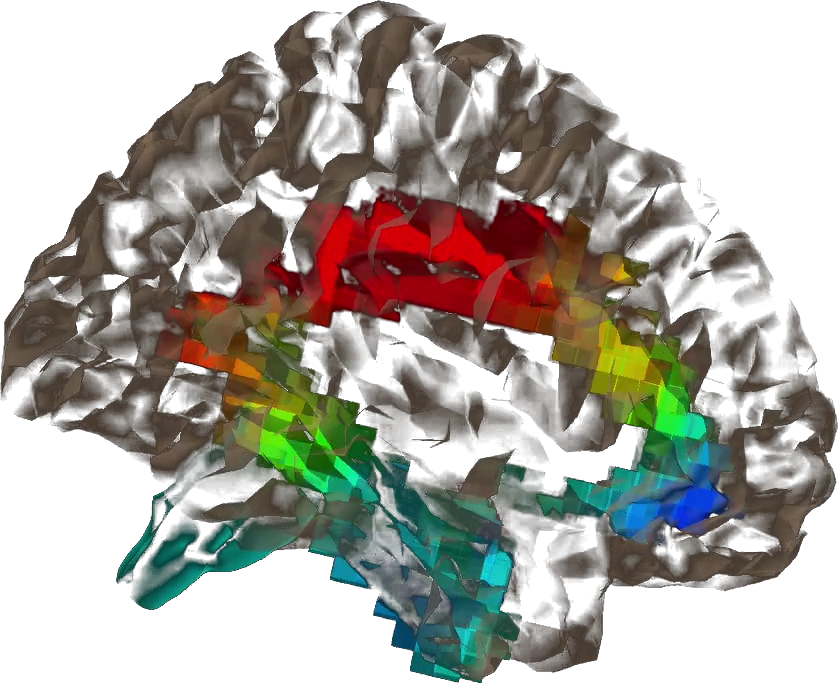
First we take an image of your brain by recording your EEG: a few minutes of your brain's electrical rhythms, eyes open and eyes closed. NeuroBloom analyzes your EEG, finds the regions and frequencies that stand out, and explains the findings to you in plain language: where your brain works harder than it needs to, where it is quieter than expected, and what that tends to feel like day to day.
Then it does the useful part. From your brain image it proposes a personalized program: where the electrodes go, how gently to begin, and what to watch for. A NeuroBloom provider reviews every proposal before it reaches you.
"Your frontal regions show more slow wave activity than expected for your age, especially on the left. People with this pattern often describe mornings as the hardest part of the day and find it takes effort to get started. Your program begins with a gentle left frontal placement, and Bloom will ask about morning energy as we go."
Image. Nurture. Image again.
tDCS uses a very small but effective electric current to gently encourage activity in a chosen region. Over a cycle of sessions the brain tends to settle into the new pattern. NeuroBloom makes that a routine you can keep at home.
Record your EEG
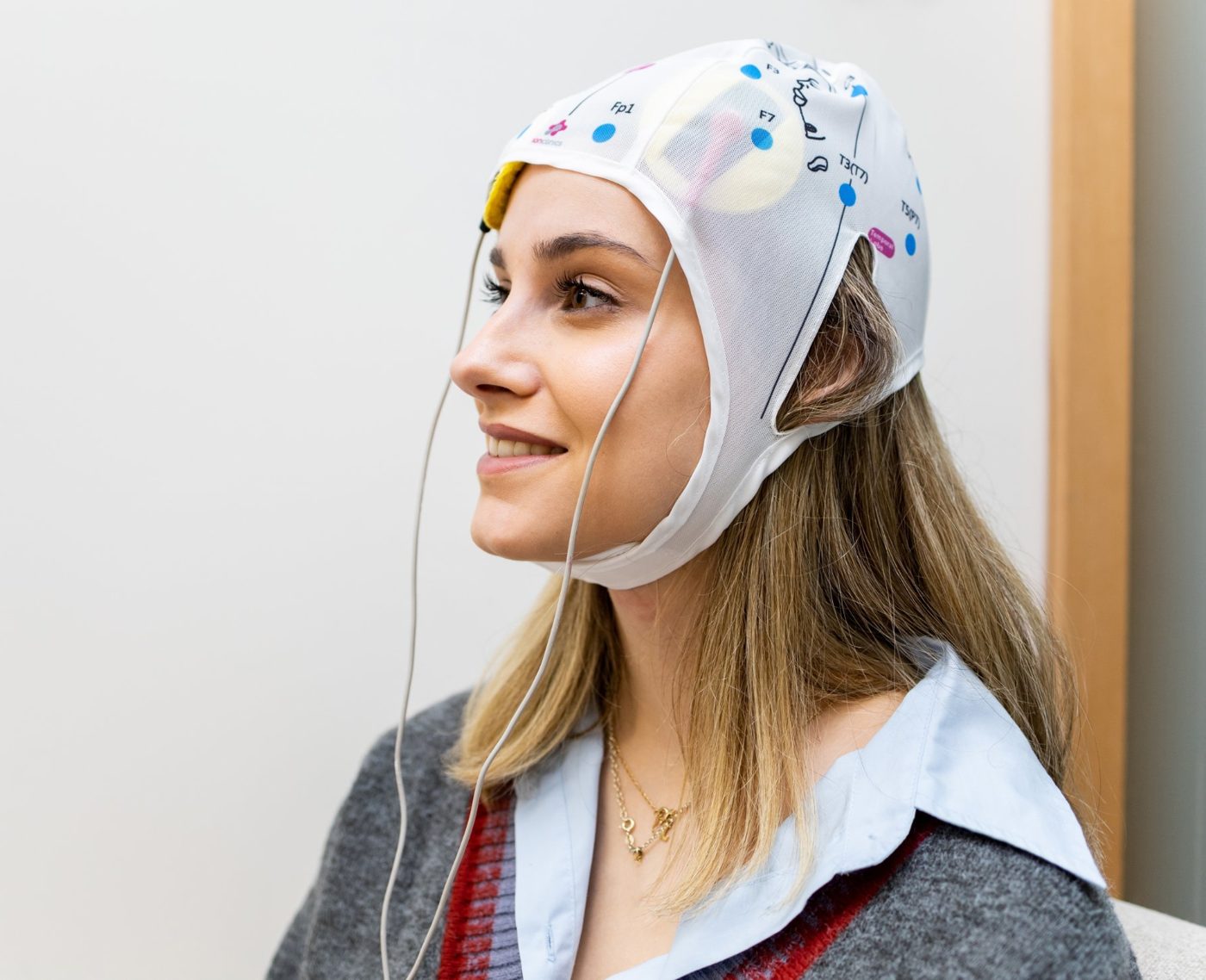
A 19 channel EEG at a participating location. About thirty minutes, nothing invasive.
Read your insights
NeuroBloom explains your patterns and proposes a program. Your Bloom provider reviews and approves it.
Twenty sessions at home
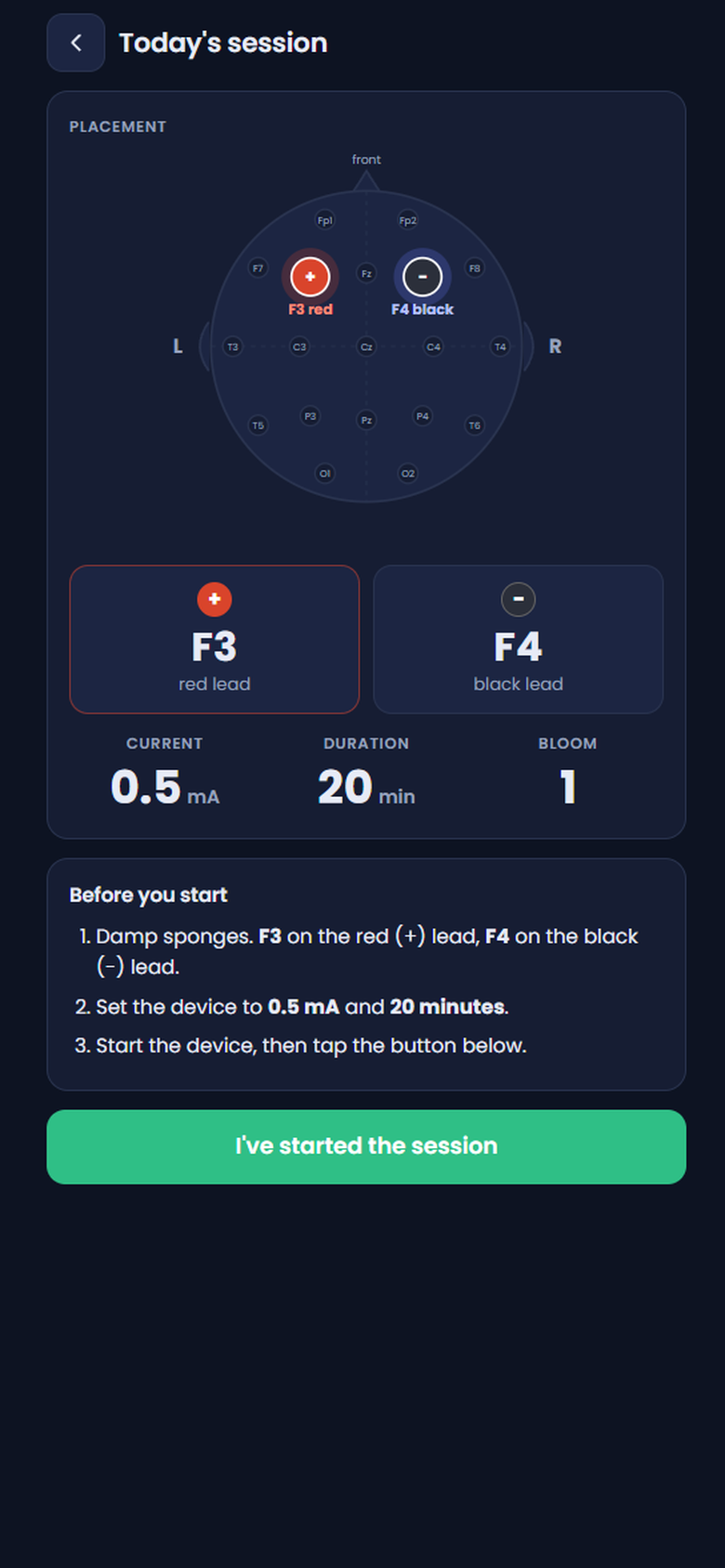
Five sessions a week for the first two weeks, then three a week. Bloom reminds you, tells you what to set and checks in afterward. Current rises in gentle steps and eases back if you need it to.
See what changed
A new image, compared side by side with the last. NeuroBloom updates your insights and the next cycle begins.
A gentle nudge.
Transcranial direct current stimulation, or tDCS, is a gentle form of brain stimulation. A small device sends a very low electrical current, about the strength of a 9 volt battery, through two damp sponge electrodes resting on the scalp. Sessions last 20 to 30 minutes, and most people feel only a mild tingling or itch under the sponges for the first minute or two.
The current is far too weak to make neurons fire on its own. Instead it nudges them: the area under one electrode becomes slightly easier to activate, and the area under the other becomes slightly calmer. Repeated over days and weeks, those small shifts can help the brain settle into healthier patterns. Think of it as tilting the ground a little so that the work you are already doing, in therapy, in daily life, in sleep and exercise, rolls more easily in the right direction.
Why the placement matters
Where the electrodes go decides what the current reaches. A placement that helps one person's low mood may do little for another person's anxiety or difficulty concentrating. That is why NeuroBloom begins with a qEEG brain map: a 19 channel recording of your brain's electrical activity that shows which regions are running too fast, too slow, or out of step. Your placements, current and schedule are chosen from that map by a licensed psychologist, not copied from a chart on the internet.
What the research says
tDCS has been studied in hundreds of clinical trials over the past twenty years, most often for depression, and also for anxiety, attention, chronic pain and recovery after stroke. In December 2025 the FDA approved the first at-home tDCS device for adults with moderate to severe depression, after a trial showing a meaningful advantage over sham stimulation, and it became available in the United States in September 2026. The effect is usually modest on its own and stronger when combined with therapy or skills practice. NeuroBloom uses a different, consumer-grade device, and your placements are chosen from your own brain map rather than fixed to one spot. That means its use here is off-label: it is offered as part of care with your psychologist, with your informed consent, not as a stand-alone cure.
Safety
With the low currents and session lengths used in NeuroBloom, tDCS has a good safety record. The most common effects are tingling, itching or mild redness where the sponges sit, and occasionally a light headache or tiredness after a session, all of which pass quickly. tDCS is not recommended for people with implanted metal or electronic devices in the head or neck, a history of seizures, or skin conditions on the scalp, and these are checked in your screening before you join.
What a NeuroBloom session looks like
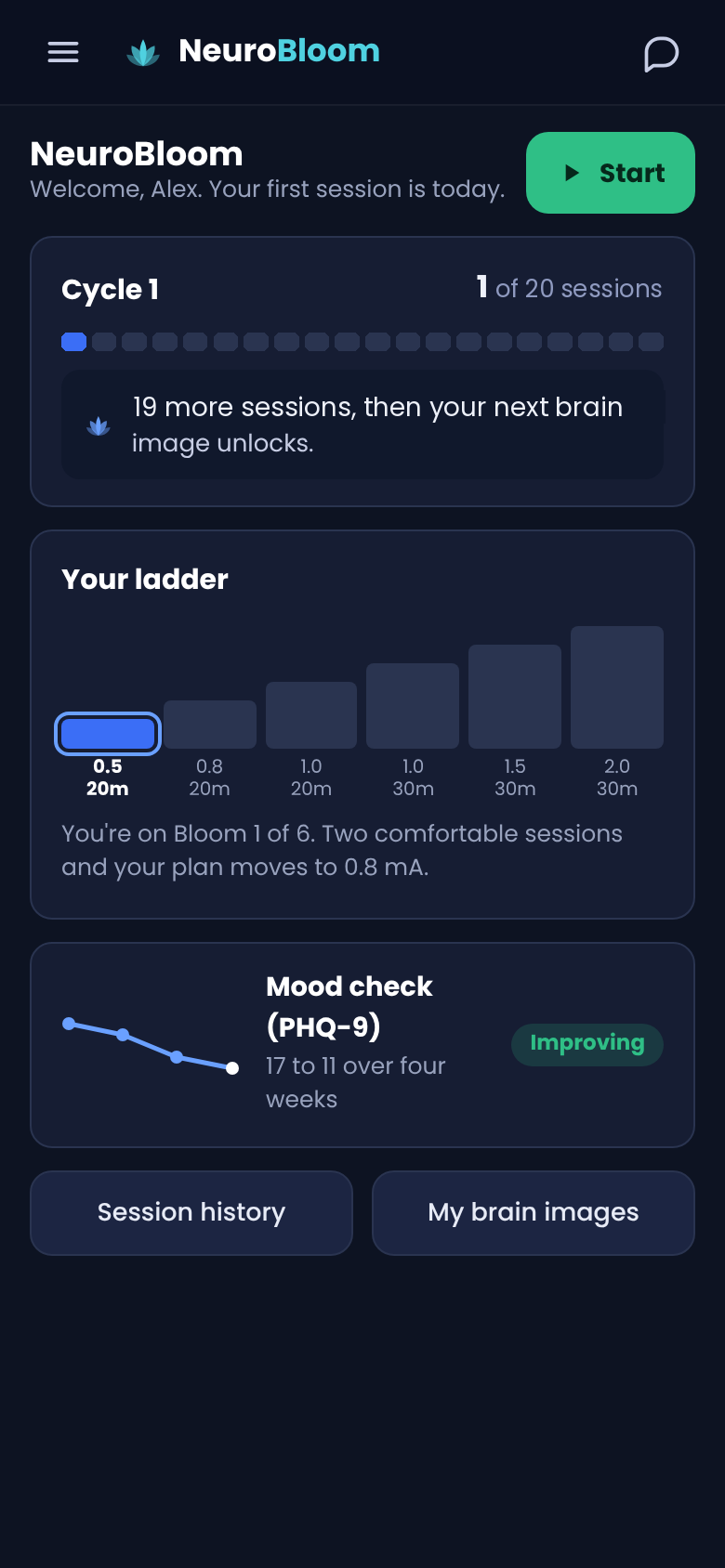
You use the tDCS device we lend you, included in your membership, at home five days a week for the first two weeks and then three days a week, in treatment cycles of 20 sessions with gentle dose increases that we call Blooms. The app shows you exactly where to put each electrode, what settings to use, and when to stop. You check in after each session, and your psychologist reviews your progress and adjusts the plan between Blooms.
A companion that tracks progress. A provider who decides.
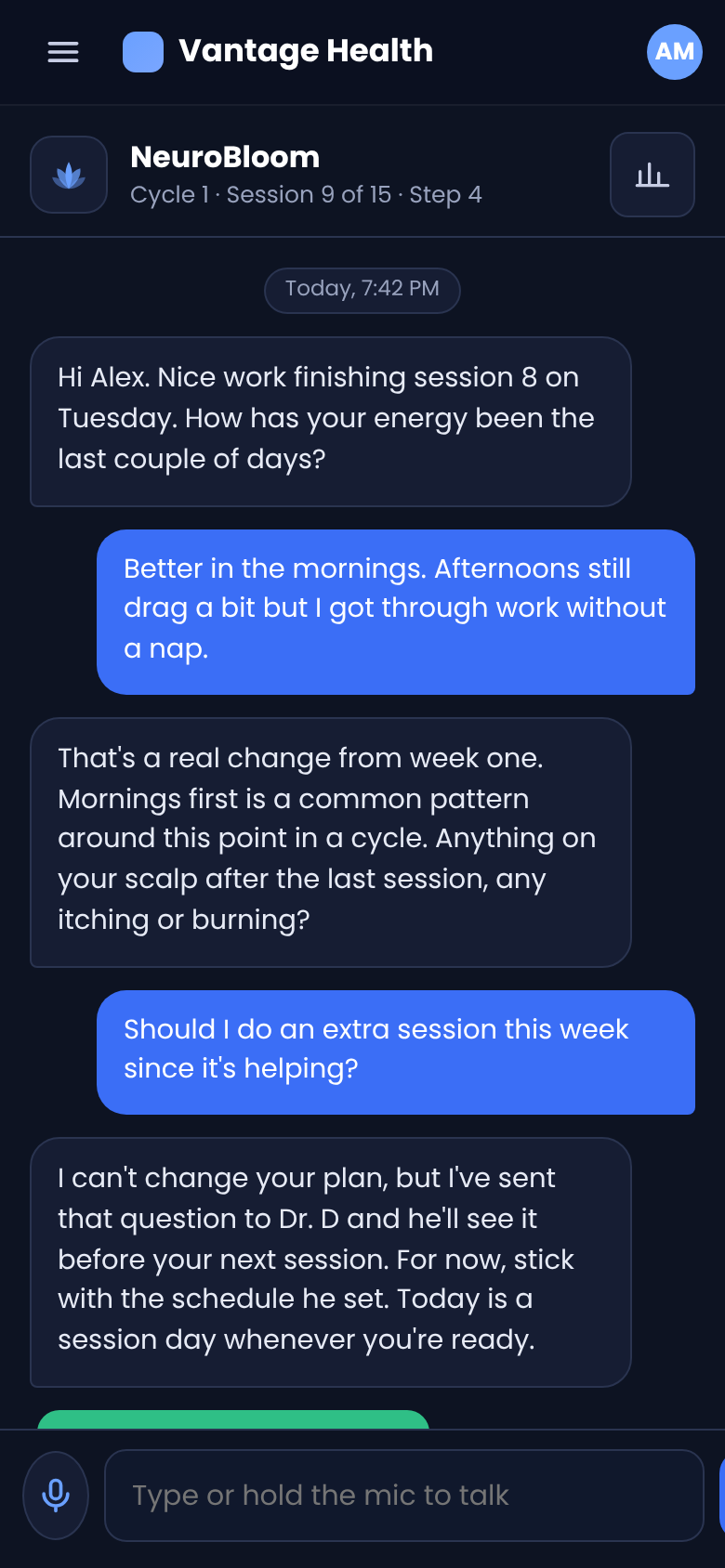
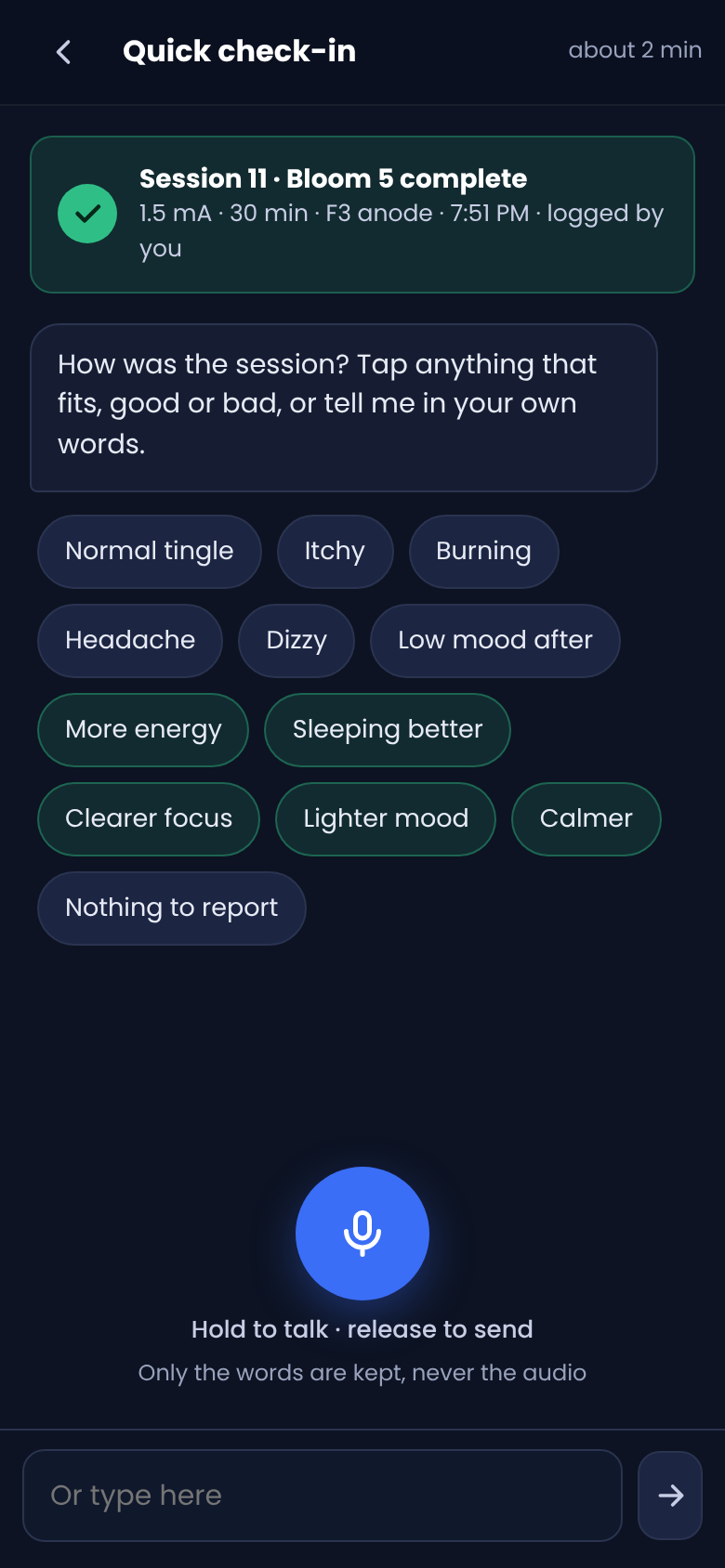
Bloom is the companion you actually talk to. After every session it checks in: how the session felt, how your sleep and energy have been, and what's getting better. It answers your questions about the program and your device, and it notices patterns across weeks that are easy to miss day to day. Bloom never changes your program on its own. Anything about your plan goes to your Bloom provider, who replies through the app.
Small steps up. Quick steps back.
Everyone starts low. Two comfortable sessions in a row move you up one Bloom; anything uncomfortable or unexpected moves you down and holds there. Your Bloom provider sets the ceiling, is alerted when something needs a human look, and can be reached from inside the app.
- Six Blooms, from 0.5 mA to a 2.0 mA ceiling, with a gentle ramp before full current.
- The app can only move within the range your provider set.
- Short wellbeing check-ins on mood, focus, or sleep, so progress is measured rather than guessed.
- If you ever describe a crisis, Bloom shows you how to get help right away and alerts your provider immediately.
One monthly membership. Everything in the cycle.
Your membership covers the analysis of every brain image, your written insights, Bloom, the app, a 30 minute video review with your psychologist after each image, and a fresh brain image at the end of each cycle. Your tDCS device is included, on loan for as long as you are a member.
Twenty sessions in our office: about $4,000. Twenty sessions with Flow, the FDA approved home device: $2,200, device included, one fixed placement, no brain map.
Twenty sessions with NeuroBloom: about $1,200, device included, with two brain maps and two 30 minute video reviews with a licensed psychologist.
Brain images are recorded at participating locations. NeuroBloom is currently open to California residents, with more locations as the program grows.
- Analysis and plain language insights for every image
- A personalized home program with a gentle Bloom ladder
- Bloom check-ins and session day reminders
- Provider review of every alert and question
- Your first brain image, and a new one every 20 sessions, included
- A 30 minute video review with your psychologist after every brain image, to go over the results and plan the next Bloom
- No sign-up fee. Pause or cancel any time
- Recording your EEG at a clinic near you? $100 off your next month for each outside brain map
- The tDCS device is included on loan. It goes back when your membership ends; a $200 fee applies only if it is not returned or comes back damaged
Where to record your EEG
Your program is built from a 19 channel EEG, about thirty minutes, eyes open and eyes closed, nothing invasive. Record it at one of our offices, or at a clinic near you from this list. Ask the clinic for the raw recording file (EDF) and bring it to your first visit.
Run a clinic that records 19 channel EEG? List it here
Free. We check each listing before it appears. To be listed, your clinic needs to record a 19 channel EEG with an eyes open and an eyes closed recording, 5 to 10 minutes each, and give the client both as raw EDF files. Please tell us the make and model of your amplifier and your price for the recording.
A program of Mind Body Treatment
NeuroBloom grew out of Mind Body Treatment, a neuropsychology practice in Oakland and Santa Rosa, California, that has offered qEEG brain mapping, neurofeedback, biofeedback and in-office tDCS for years. The same providers who run those programs in the clinic review every NeuroBloom plan.
Your brain image is recorded at one of the practice's offices or at a clinic you choose. Members become clients of the practice, with the same privacy protections as any patient.
Visit mindbodytreatment.com